
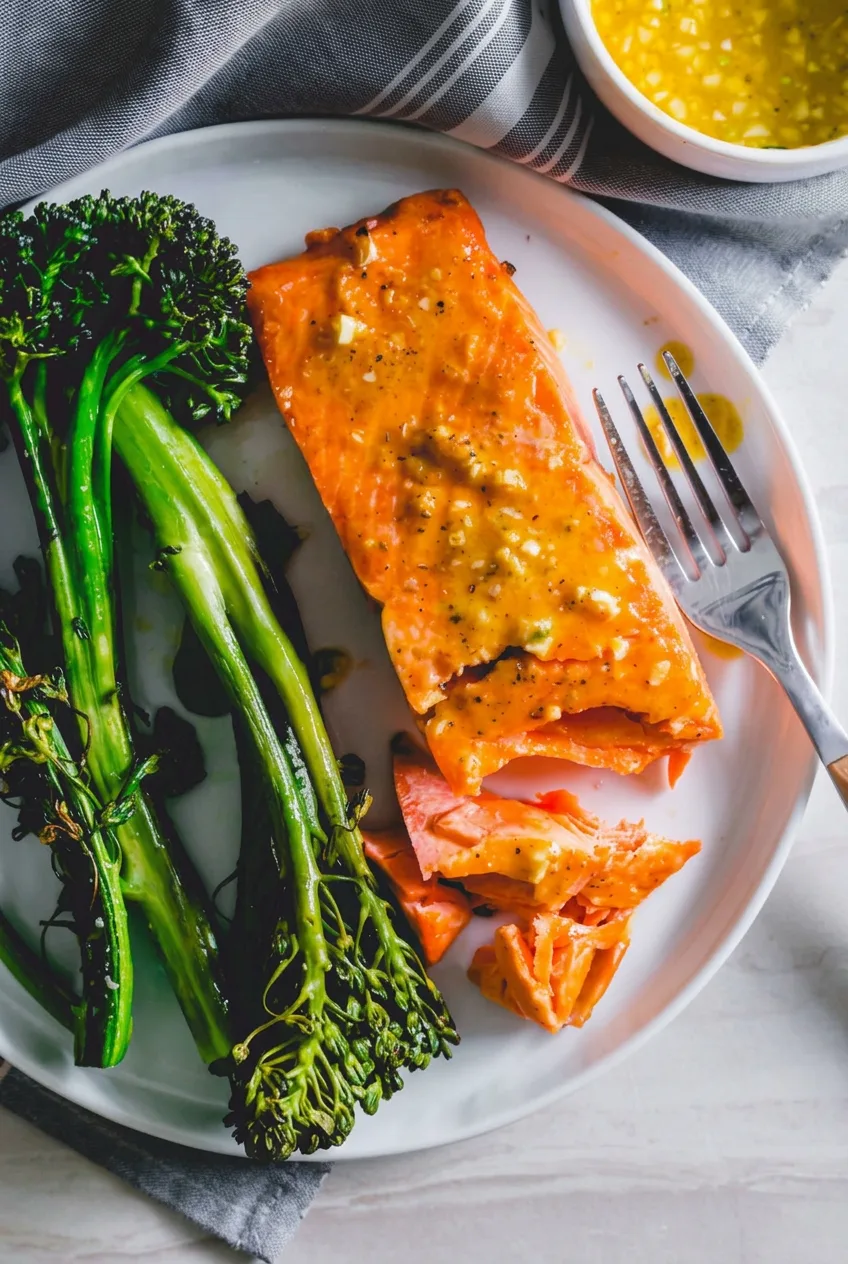
Frozen Salmon in Air Fryer
Frozen salmon can go straight into a preheated air fryer without thawing. Cook the fillets for 6 minutes before adding oil and garlic seasoning: once the icy surface softens, the seasoning stays on the fish instead of sliding off. Keep skin-on fillets skin-side down throughout, then finish with a squeeze of lemon.
At 400°F (205°C), most fillets take 10 to 14 minutes total. Thickness and air-fryer performance affect the finish time, so start checking at 10 minutes and use a thermometer to check the center.
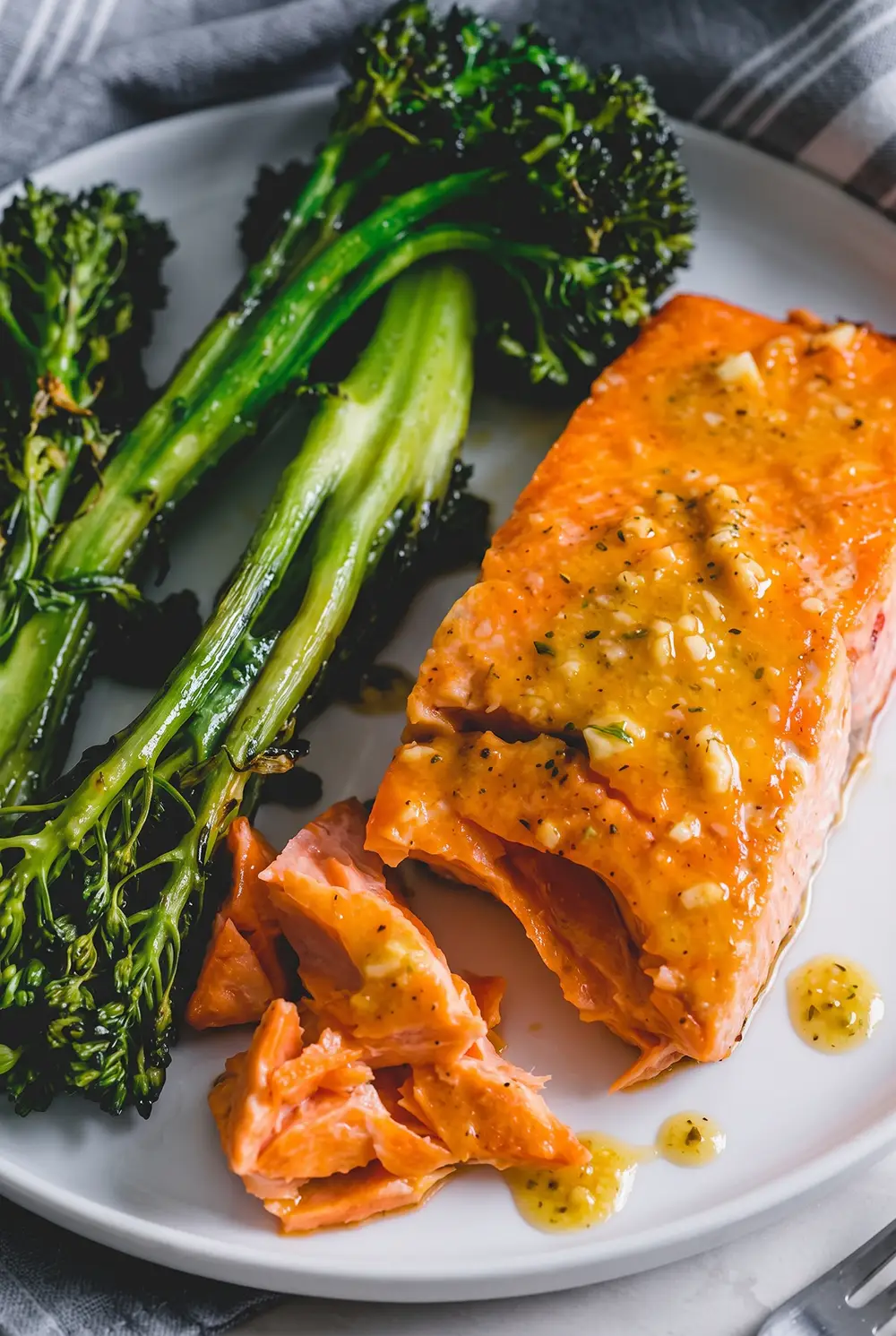
Ingredients for Air Fryer Frozen Salmon
- 4 frozen skin-on salmon fillets, 5 to 6 ounces each (about 680g total)
- 2 teaspoons olive oil
- 1/2 teaspoon kosher salt
- 1/4 teaspoon black pepper
- 1 teaspoon garlic powder
- Optional: 1 lemon, cut into wedges, for serving
Skinless frozen fillets also work, but handle them gently because they can be more delicate and prone to sticking. Avocado oil can replace the olive oil. Lightly oil the basket only if sticking is common in your air fryer.
How to Cook Frozen Salmon in the Air Fryer

Servings: 4. Prep: 5 minutes. Cook: 10 to 14 minutes. Cooking times assume a preheated air fryer.
- Preheat and remove loose ice: Preheat the air fryer to 400°F according to its instructions. Brush or pat loose frost from the fillets to limit excess surface water. Do not force apart fillets that are firmly frozen together.
- Cook for 6 minutes: Arrange the fillets in a single layer, skin-side down, with space between them. Cook at 400°F for 6 minutes. If any fillets were stuck together, separate them now only if they release easily. Give each portion space for the remaining cook time; cook in batches if needed.
- Oil and season: Carefully brush the tops and sides with the olive oil, then sprinkle with the salt, pepper, and garlic powder. The softened surface will hold the seasoning better than the icy surface would.
- Finish cooking: Keep the fillets skin-side down and cook at 400°F for 4 to 8 minutes more. Start checking thin fillets at 10 minutes total cooking time. The center should be opaque and separate into moist flakes when gently tested with a fork. Check the thickest part with an instant-read thermometer; the recipe’s primary endpoint is 145°F (65°C).
- Serve: Transfer to plates, rest for 1 to 2 minutes, and squeeze lemon over the salmon if desired.
How Fillet Thickness Affects Cooking Time
Thin sockeye-style portions may finish near 10 minutes total, while thicker Atlantic-style fillets may need 12 to 14 minutes or slightly longer. Check thick fillets every 1 to 2 minutes near the end and remove them when they reach the desired endpoint. Some cooks prefer a lower temperature for a softer center, but 145°F is the primary safety-oriented target for this recipe.
Basket size and air-fryer performance also affect timing. A little white albumin on the surface is safe to eat, but it is not a reliable doneness test. Skin helps hold the fillet together during cooking, though it may not become crisp; there is no need to flip or shake the salmon.
Fresh fillets cook faster than frozen ones and should be seasoned before cooking. For a separate fresh-fillet method, see Crispy Air Fryer Salmon.
Seasoning and Glaze Variations
For a bolder dry seasoning, replace the garlic powder, salt, and pepper with 1 to 2 teaspoons of Cajun or seafood seasoning. Check the blend’s salt content before adding any extra salt.
For honey-garlic or maple-mustard salmon, brush on a modest amount of glaze after the first 6 minutes, when the surface can hold it. Watch closely during the finish: sweet glazes can darken quickly at 400°F. Check the thickest part for doneness as usual. For a separate bite-size preparation, see Air Fryer Honey Garlic Salmon Bites.
Serving, Storing, and Reheating
Serve with rice and a green vegetable, or flake the salmon into a grain bowl with greens and cucumber. Cool leftovers promptly and refrigerate in an airtight container for up to 3 days. Keep fillets whole until needed to help limit drying, or use leftover salmon in Air Fryer Salmon Cakes.
Reheat refrigerated fillets in the air fryer at 350°F (175°C) for about 3 to 4 minutes. Check early and stop once warmed through; thinner or flaked portions may need less time. If using a microwave, heat gently in short intervals. Cooked salmon can be frozen in an airtight freezer-safe container for up to 3 months; thaw overnight in the refrigerator before reheating.
Nutrition
Approximate nutrition per serving (1 fillet, excluding optional lemon): 375 calories, 35g protein, 25g fat, and less than 1g carbohydrates. Approximate values per 100g of cooked salmon: 270 calories, 25g protein, 18g fat, and less than 1g carbohydrates. Values vary with salmon variety, portion size, and moisture lost during cooking.
Frozen Salmon in Air Fryer
Equipment
- Air fryer
- Pastry brush
- Instant-read thermometer
Ingredients
For the Salmon
- 4 frozen skin-on salmon fillets, 5 to 6 ounces each (about 680g total)
- 2 teaspoons olive oil
- 1/2 teaspoon kosher salt
- 1/4 teaspoon black pepper
- 1 teaspoon garlic powder
For Serving
- 1 lemon, cut into wedges (optional)
Instructions
- Preheat the air fryer to 400°F (205°C) according to its instructions.
- Brush or pat loose frost from the salmon fillets. Do not force apart fillets that are firmly frozen together.
- Arrange the fillets in a single layer, skin-side down, with space between them. Cook at 400°F (205°C) for 6 minutes.
- Separate any fillets that were stuck together if they release easily. Brush the tops and sides with olive oil, then sprinkle with the salt, black pepper, and garlic powder.
- Cook the fillets skin-side down for 4 to 8 minutes more. Start checking thin fillets at 10 minutes total cooking time.
- Check the thickest part with an instant-read thermometer. Remove the salmon when it reaches 145°F (65°C), with an opaque center that flakes moistly with a fork.
- Transfer the salmon to plates, rest for 1 to 2 minutes, and squeeze lemon over the top if desired.
Tips
- Keep the fillets skin-side down throughout cooking; there is no need to flip or shake them.
- Cook in batches if needed so the fillets remain in a single layer with space between them.
- Start checking thin sockeye-style portions near 10 minutes total and check thicker fillets every 1 to 2 minutes near the end.
- Season after the first 6 minutes so the softened surface holds the oil and seasoning instead of letting them slide off.
- A little white albumin on the surface is safe but is not a reliable doneness test.
- Lightly oil the air-fryer basket only if sticking is common with your appliance.
Variations
- Cajun or Seafood Seasoning: Replace the garlic powder, salt, and pepper with 1 to 2 teaspoons of Cajun or seafood seasoning, checking the blend’s salt content before adding more salt.
- Honey-Garlic or Maple-Mustard Glaze: Brush a modest amount of honey-garlic or maple-mustard glaze onto the salmon after the first 6 minutes, then watch closely because sweet glazes can darken quickly at 400°F (205°C).