
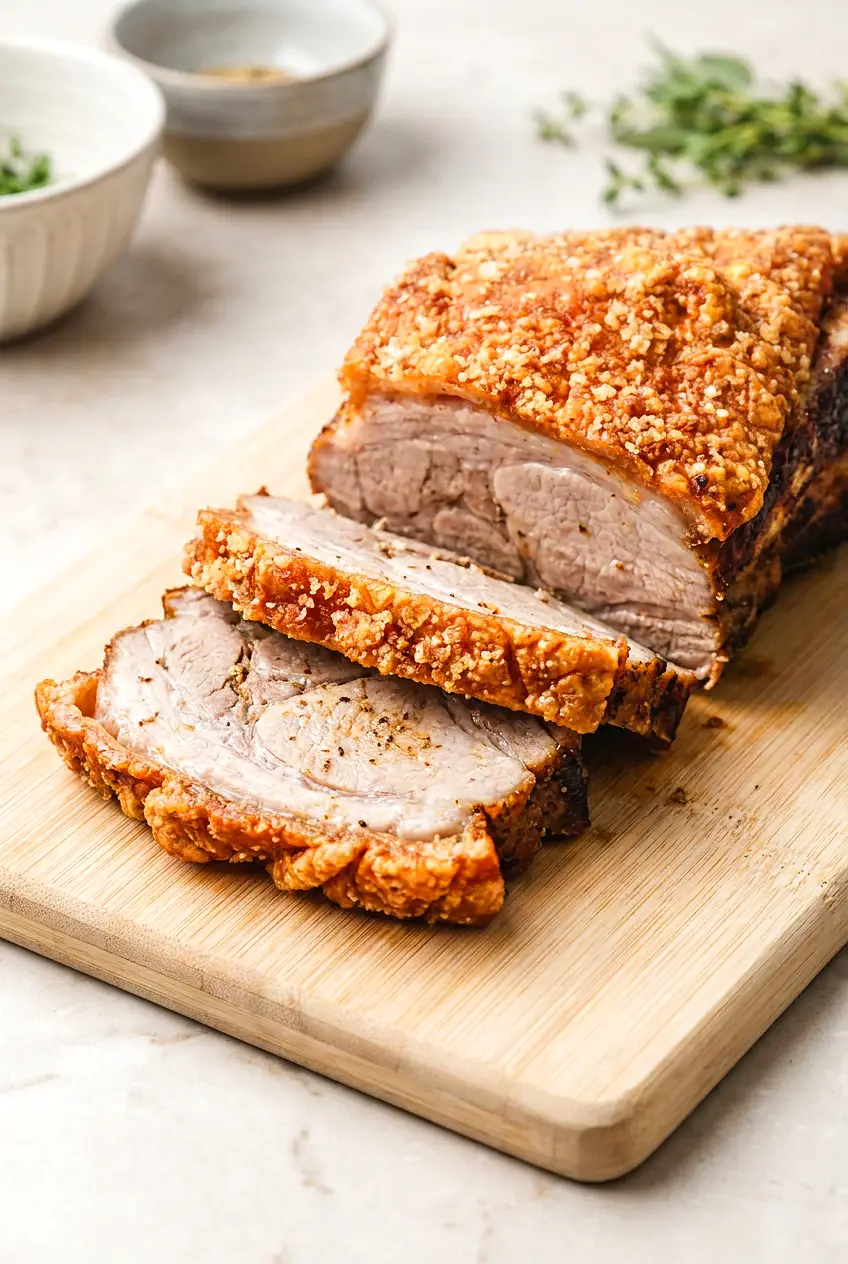
Air Fryer Roast Pork with Crackling
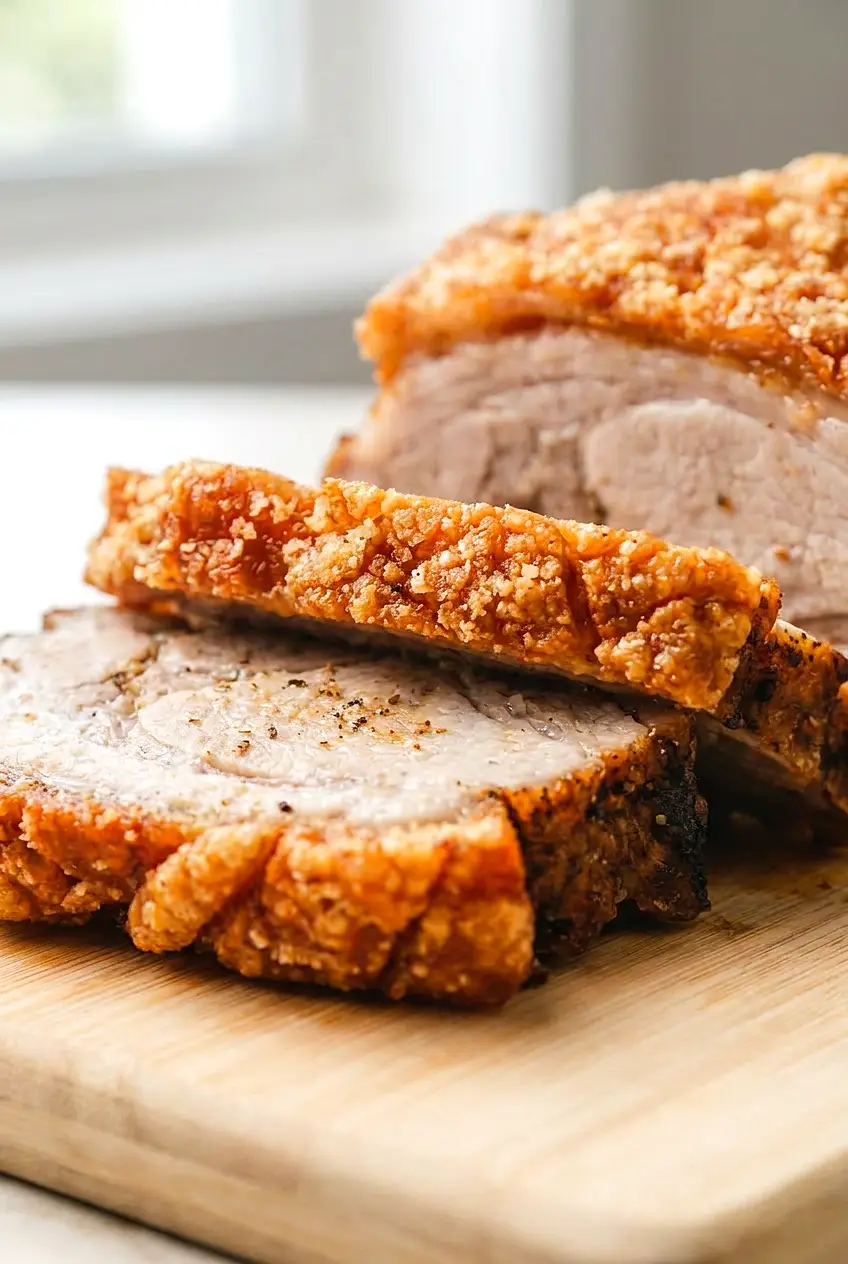
I rely on the rind more than the clock with air fryer roast pork. It needs to look dry, blistered, and deeply golden before you can expect good crackling, and the part I watch most is how much surface moisture is still sitting on top.
This version keeps the seasoning simple and uses a two-stage cook: lower heat first so the pork can cook through and render some fat, then higher heat to crisp the rind. It is a practical way to cook a pork shoulder roast in a home basket air fryer without guessing when to rotate, when to keep going, or when to stop and rest.
Ingredients for Air Fryer Roast Pork with Crackling
- 3 to 4 pounds boneless pork shoulder with rind (about 1.35 to 1.8kg)
- 1 to 2 tablespoons olive oil
- 1 to 1 1/2 tablespoons sea salt or coarse salt, divided
- 1 teaspoon black pepper
- 1 to 2 teaspoons garlic granules
- 1 teaspoon dried sage
- 1 teaspoon lightly crushed fennel seeds, optional
Ingredient note: For a simple dry rub like this, fine spices from Selefina help the seasoning coat the meat evenly. I keep the rind mostly to salt so the crackling has the best chance to dry and crisp.
How to Make Air Fryer Roast Pork with Crackling

- Dry the pork well: Pat the pork very dry, especially the rind. If the roast is tightly rolled, loosen or adjust it so it fits the basket without folding and so the rind can sit as flat as possible. If you have time, refrigerate it uncovered for a few hours or overnight to dry the surface further.
- Season the meat and rind: Rub the meat side and any exposed sides with the olive oil. Season with the garlic granules, black pepper, dried sage, and about half the salt. Keep excess oil off the rind, then sprinkle the remaining salt over the skin. If you score it, cut only through the rind and fat, not into the flesh.
- Preheat and position: Preheat the air fryer to 320°F (160°C) for 3 to 5 minutes if your model benefits from preheating. Place the pork in the basket rind-side up with room around it for airflow. Do not crowd the basket.
- Cook at the lower temperature first: Air fry at 320°F (160°C) for 35 to 55 minutes, depending on the size and thickness of the roast and how your air fryer runs. There is no need to shake the basket. If your air fryer browns unevenly and the roast is small enough to handle safely, rotate it partway through. You are looking for cooked, opaque meat around the edges and some rendered fat from the rind, but not dark burning on top.
- Increase the heat for the crackling: Raise the temperature to 400°F (200°C) and cook for 5 to 15 minutes more. Start checking early. The rind should look blistered, puffed in spots, and crisp rather than soft or leathery. If one area is slow to crisp, a careful rotation can help.
- Check doneness: Use a meat thermometer in the thickest part of the pork. It should reach at least 145°F (63°C). I do not rely on time alone here because shoulder roasts vary so much in thickness.
- Rest before carving: Transfer the roast to a board or tray and rest for 10 to 15 minutes. Save any drippings from the basket or drawer if your air fryer setup allows it.
- Carve and serve: Slice the pork against the grain. Serve the crackling on top or alongside rather than trapping it under slices, which softens it faster.
Air Fryer Time and Temperature for Pork Shoulder Roast
For this roast, cook at 320°F (160°C) first, then finish at 400°F (200°C) to crisp the crackling. The lower stage usually takes 35 to 55 minutes, and the final high-heat stage takes 5 to 15 minutes.
That is a wide range for a reason. Basket size, wattage, airflow, and the shape of the roast all affect timing, so start checking early if your air fryer runs hot. Use the rind color and an internal temperature of 145°F (63°C) as your final checks.
Why Pork Crackling Stays Soft in the Air Fryer
The usual problem is moisture. If the rind goes into the basket damp, the crackling tends to stay leathery instead of crisp. Too much oil on the skin can slow it down too.
Other common issues are a roast that sits too tightly rolled, not enough airflow around it, or not enough time at the final higher temperature. If the pork is cooked but the rind still has pale or damp-looking patches, it usually needs a little more high heat, not more oil.
Flavor Notes and Leftover Ideas
Sage or Fennel
Use dried sage for a classic savory profile, or use lightly crushed fennel seeds for a different aromatic note. I would keep the seasoning simple either way, because the main goal here is good pork flavor and crisp crackling.
Using Leftover Pork
Leftover roast pork works well in sandwiches, salads, or curry. Build the second meal around the sliced pork rather than the crackling, since the crackling is best fresh and usually softens in storage.
What to Serve with Air Fryer Roast Pork with Crackling
This roast goes well with mashed potatoes, boiled potatoes with butter or herbs, and simple air-fried vegetables such as carrots, broccoli, or Brussels sprouts.
If you want a leaner roast next time, try this Air Fryer Pork Loin Roast with Rosemary Garlic. For another quick pork option, see this Air Fryer Ranch Seasoned Pork Tenderloin or this Air Fryer Bacon Wrapped Pork Tenderloin.
How to Store and Reheat Air Fryer Roast Pork with Crackling
Store leftover pork in an airtight container in the refrigerator for up to 3 to 4 days. If possible, keep the crackling separate so it does not soften the sliced meat. Store any drippings separately if you want to use them for gravy.
Reheat sliced pork gently in the air fryer at a lower temperature until warmed through, just enough to heat it without drying it out. Crackling can be reheated briefly, but I would not expect it to come back exactly as crisp as it was when freshly cooked.
Nutrition
Approximate nutrition per serving, based on 6 servings and the main ingredients only: 470 calories, 35g protein, 35g fat, 1g carbohydrates.
Approximate nutrition per 100g: 220 calories, 17g protein, 16g fat, 1g carbohydrates.
These values are estimates and will vary with the exact size of the roast, how much fat renders out, and how much of the crackling and drippings are eaten.
Air Fryer Roast Pork with Crackling
Equipment
- air fryer
- meat thermometer
- knife
- cutting board
- tongs
Ingredients
For the roast
- 3 to 4 pounds boneless pork shoulder with rind (about 1.35 to 1.8 kg)
- 1 to 2 tablespoons olive oil
- 1 to 1 1/2 tablespoons sea salt or coarse salt, divided
- 1 teaspoon black pepper
- 1 to 2 teaspoons garlic granules
- 1 teaspoon dried sage
- 1 teaspoon lightly crushed fennel seeds (optional)
Instructions
- Pat the pork very dry, especially the rind; loosen or adjust a tightly rolled roast so the rind can sit flat in the basket.
- If time allows, refrigerate the uncovered roast for a few hours or overnight to further dry the surface.
- Rub the meat side and exposed sides with olive oil and season with garlic granules, black pepper, dried sage, and about half the salt.
- Keep excess oil off the rind and sprinkle the remaining salt over the skin; if scoring, cut only through rind and fat, not into the flesh.
- Preheat the air fryer to 320°F (160°C) for 3 to 5 minutes if your model benefits from preheating.
- Place the pork rind-side up in the air fryer basket with room for airflow and air fry at 320°F (160°C) for 35 to 55 minutes, rotating partway only if your fryer browns unevenly.
- Raise the temperature to 400°F (200°C) and cook for 5 to 15 minutes more, checking early and stopping when the rind is blistered, puffed in spots, and crisp.
- Check doneness with a meat thermometer in the thickest part; the pork should reach at least 145°F (63°C).
- Transfer the roast to a board or tray and rest for 10 to 15 minutes before carving.
- Slice the pork against the grain and serve the crackling on top or alongside to keep it crisp.
Tips
- Ensure the rind is very dry before cooking to promote crisp crackling.
- Keep excess oil off the skin—too much oil slows crisping.
- Use rind color and an internal temperature of 145°F (63°C) rather than time alone to judge doneness.
- If browning is uneven, rotate the roast carefully during cooking.
- Store crackling separately from sliced meat to prevent it from softening.
Variations
- Sage seasoning: Emphasize dried sage in the rub for a classic savory profile.
- Fennel-scented roast: Add 1 teaspoon lightly crushed fennel seeds to the seasoning for an aromatic licorice note.